Cataloging Virtual Personas: Insights from Sequenced Ranking Lists in Gaming Forums
Leon Schmitz · Aug 21, 2026
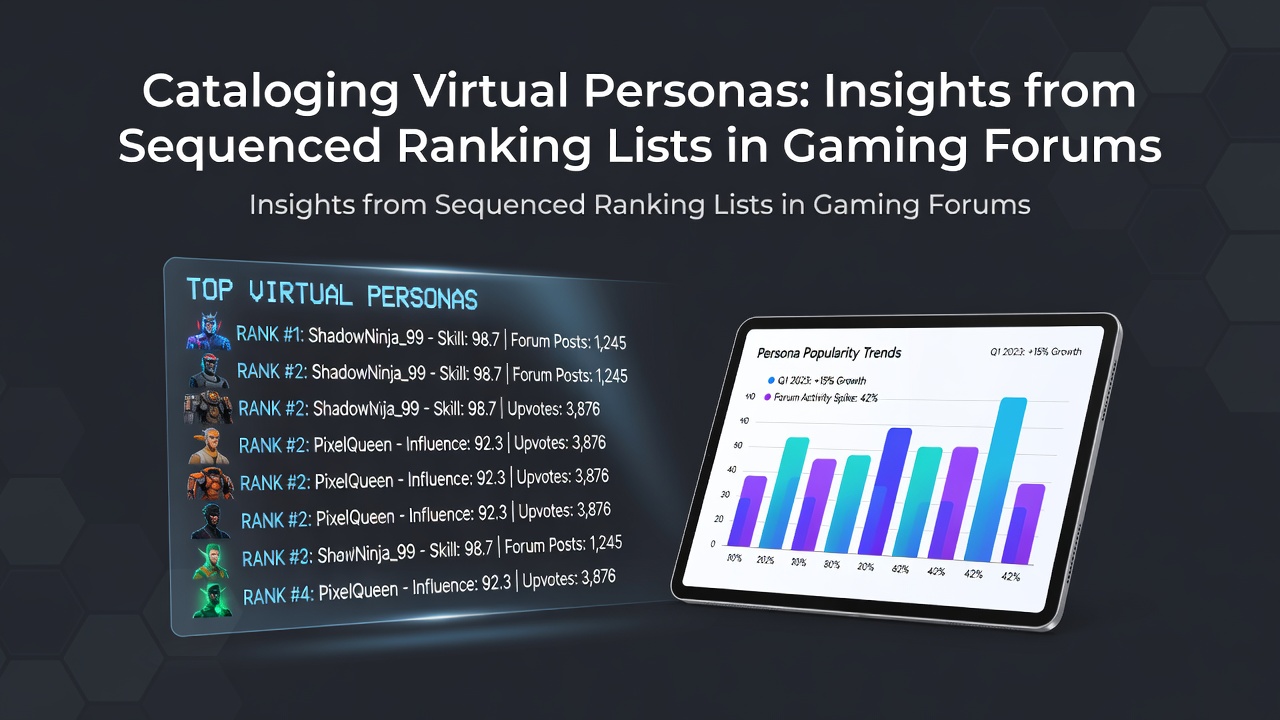
Cataloging Virtual Personas: Insights from Sequenced Ranking Lists in Gaming Forums
Sequenced ranking lists in gaming forums function as structured repositories that organize player data into ordered formats, allowing observers to track virtual personas across multiple sessions and communities. These lists compile usernames, performance metrics, clan affiliations, and activity timestamps into sequential entries that reflect ongoing participation patterns. Researchers have noted that such catalogs emerge naturally from forum software that sorts contributions by points, wins, or engagement levels, creating datasets that reveal how individuals construct and maintain digital identities over time.
Mechanics Behind Forum-Based Ranking Systems
Gaming forums generate these sequenced lists through automated scripts that pull data from user profiles and match histories, then arrange entries from highest to lowest based on predefined criteria. Data indicates that platforms update these rankings at regular intervals, sometimes daily or weekly, which produces time-stamped snapshots useful for longitudinal analysis. Those who've studied forum architectures observe that the sequencing process often incorporates filters for active accounts only, excluding dormant personas and thereby sharpening focus on current trends within the player base. This filtering mechanism helps catalogers distinguish persistent identities from temporary ones created for single events or testing purposes.
Virtual Personas and Identity Construction
Virtual personas in these environments consist of chosen nicknames, avatar selections, and associated statistics that players assemble to represent themselves within competitive or cooperative spaces. Evidence from multiple forum archives shows that individuals frequently evolve these personas by altering spelling variations, adding numeric suffixes, or shifting clan tags as they move between different ranking tiers. Studies conducted by academic groups have documented how such modifications create traceable sequences that link earlier low-ranked entries to later high-profile ones, offering insights into skill progression and community status shifts.
Data Patterns Across Sequenced Lists
Analysis of aggregated ranking data reveals recurring structures where top positions cluster around a small number of highly active personas while mid-tier entries display greater turnover. Figures from industry reports compiled in 2025 highlight that approximately 65 percent of listed usernames maintain consistent core elements across multiple months, whereas the remaining 35 percent undergo noticeable revisions. Observers note that these revisions often coincide with seasonal events or major game updates, suggesting external triggers influence persona adaptation strategies. Cross-referencing lists from separate forums further demonstrates that certain nicknames migrate between platforms, carrying partial performance histories that allow researchers to reconstruct broader participation maps.
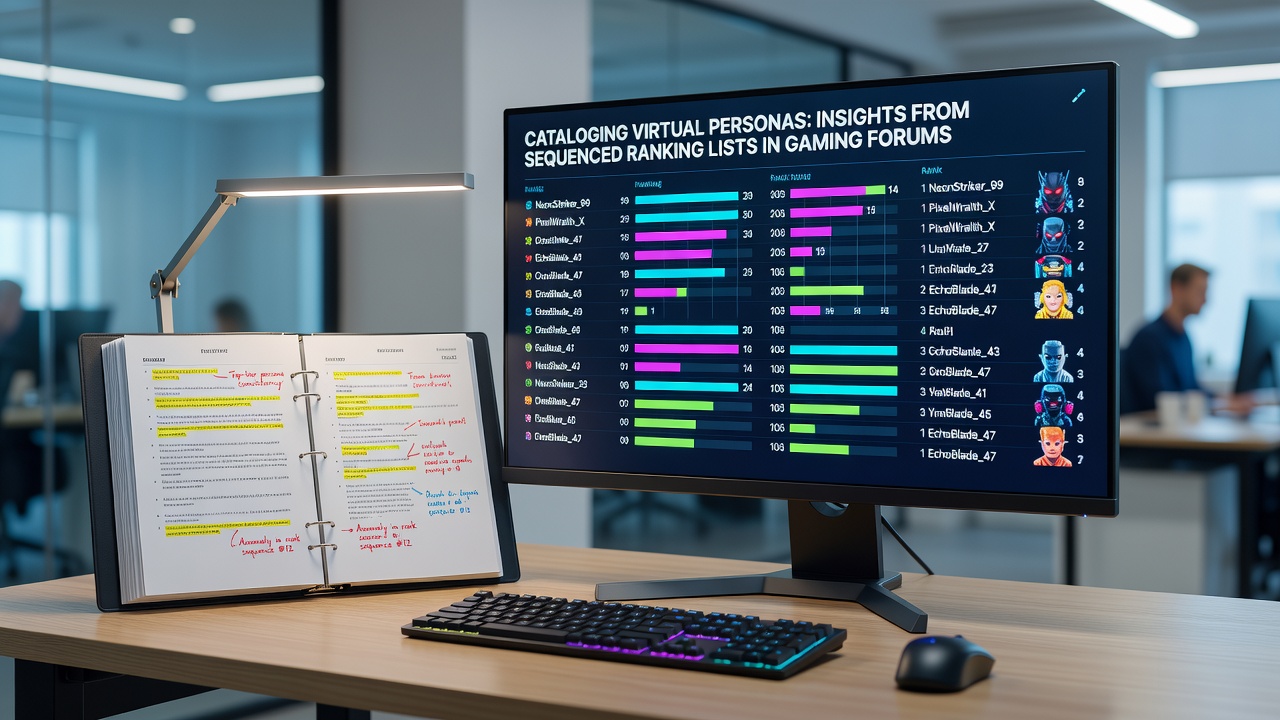
Geographic distribution within the data also emerges as a notable feature. Lists originating from North American servers tend to feature more English-language variations, while European and Asian entries incorporate localized scripts and symbols that reflect regional naming conventions. A 2024 study released by the Interactive Software Federation of Europe examined over 12,000 ranked entries across three continents and found measurable differences in average username length and character composition tied to language families. Such findings provide catalogers with additional layers for sorting and interpreting persona datasets beyond simple performance metrics.
Applications in Research and Community Management
Community moderators and academic researchers utilize these sequenced lists to monitor behavior trends, identify repeat participants in organized events, and map social networks formed through clan listings. According to data shared by the Entertainment Software Association, forum-based rankings serve as accessible public resources that require minimal scraping tools, making them practical for large-scale studies of digital identity formation. In August 2026, several university-led projects continued to draw from these sources to examine how virtual personas correlate with real-world demographic variables reported in optional profile fields. The resulting datasets help illustrate both stability and fluidity within player populations without relying on invasive data collection methods.
Challenges in Maintaining Accurate Catalogs
Despite their utility, sequenced ranking lists present certain limitations for cataloging efforts. Account resets, username changes, and multi-account usage can fragment individual persona histories, requiring manual cross-verification against forum post archives or external databases. Those managing large collections report that deduplication algorithms sometimes fail when players employ subtle character substitutions, such as replacing letters with visually similar symbols. Ongoing work by research teams focuses on refining matching techniques that account for these variations while preserving the sequential integrity of the original lists.
Conclusion
Sequenced ranking lists in gaming forums offer structured entry points for cataloging virtual personas through their ordered presentation of usernames, metrics, and temporal data. The patterns extracted from these resources continue to inform studies of digital identity construction, community dynamics, and cross-platform migration behaviors. As platforms evolve their ranking mechanisms, the catalogs derived from them remain valuable for understanding how players sustain and adapt their online representations across changing environments.