Cross-Platform Aggregation Techniques for Player Nicknames in Niche Communities
Noah Butler · Aug 14, 2026
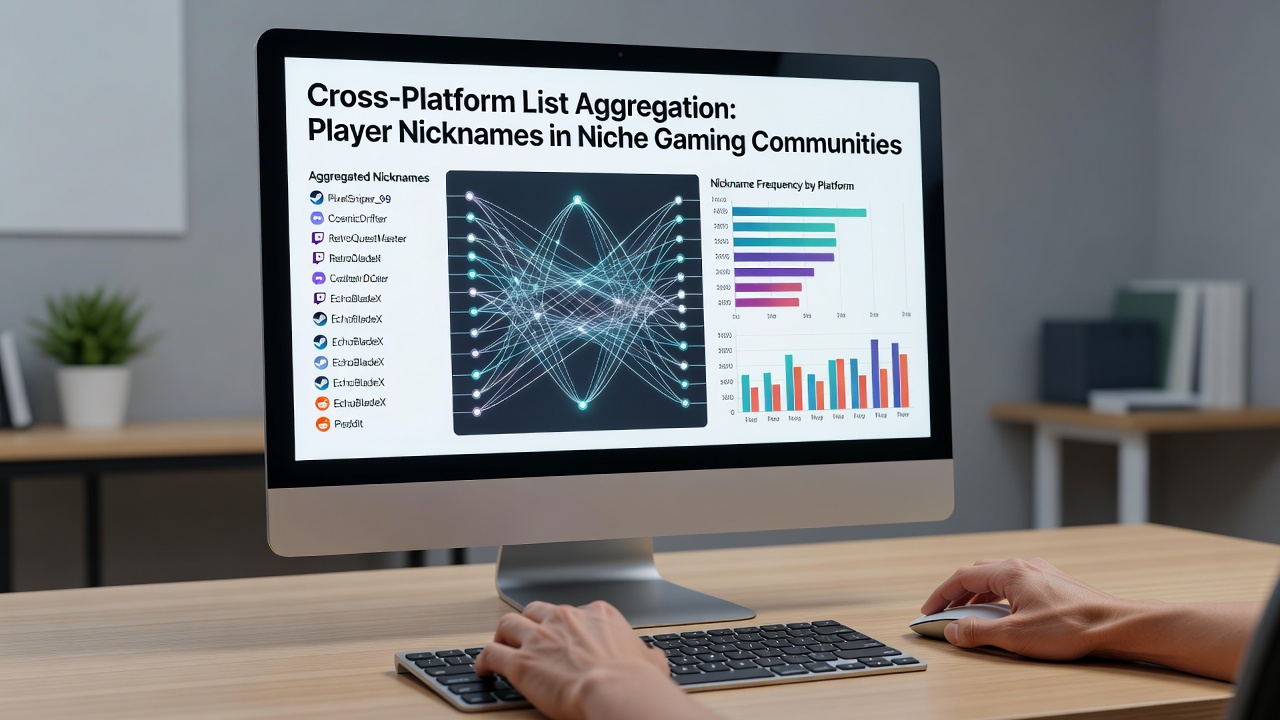
Cross-Platform Aggregation Techniques for Player Nicknames in Niche Communities
Cross-platform list aggregation for player nicknames involves pulling usernames from separate forums, game servers, and ranking systems then merging them into unified datasets while preserving accuracy across different community rules and data formats. Observers note that niche gaming groups often maintain independent lists on platforms with unique structures, which creates demand for methods that handle variations in naming conventions, character limits, and verification processes. Researchers have documented how these techniques evolved from basic copy-and-paste collections in earlier years to automated scripts that scan APIs and scrape public pages under controlled conditions.
Core Aggregation Approaches
One common method relies on API connections where supported platforms expose nickname data through documented endpoints, allowing scripts to pull updates at regular intervals and match entries by exact string comparison or fuzzy logic for minor spelling differences. Another approach uses database federation that combines tables from multiple sources while applying deduplication rules based on associated metadata such as registration dates or linked social profiles. Those who've examined these systems report that manual review layers still supplement automation in many niche communities because automated matches can fail when players reuse similar but not identical aliases across regions.
Algorithmic matching forms a third layer, and it employs phonetic encoding or Levenshtein distance calculations to identify likely duplicates even when character sets differ between Cyrillic and Latin scripts. Data shows that communities focused on specific game modes apply custom weighting to prioritize certain platforms during merges, which reduces noise from less active lists. In August 2026 several mid-sized forums began publishing standardized export formats that simplify these merges for external tools.
Challenges in Niche Environments
Privacy regulations in multiple jurisdictions require aggregators to exclude personal identifiers beyond the nickname itself, which limits the depth of cross-referencing available. Observers note that rate limits on public APIs force schedulers to prioritize high-value sources, leaving smaller lists updated less frequently. Duplicate detection becomes harder when players intentionally vary capitalization or insert symbols, and researchers discovered that simple string normalization misses many intentional variants.
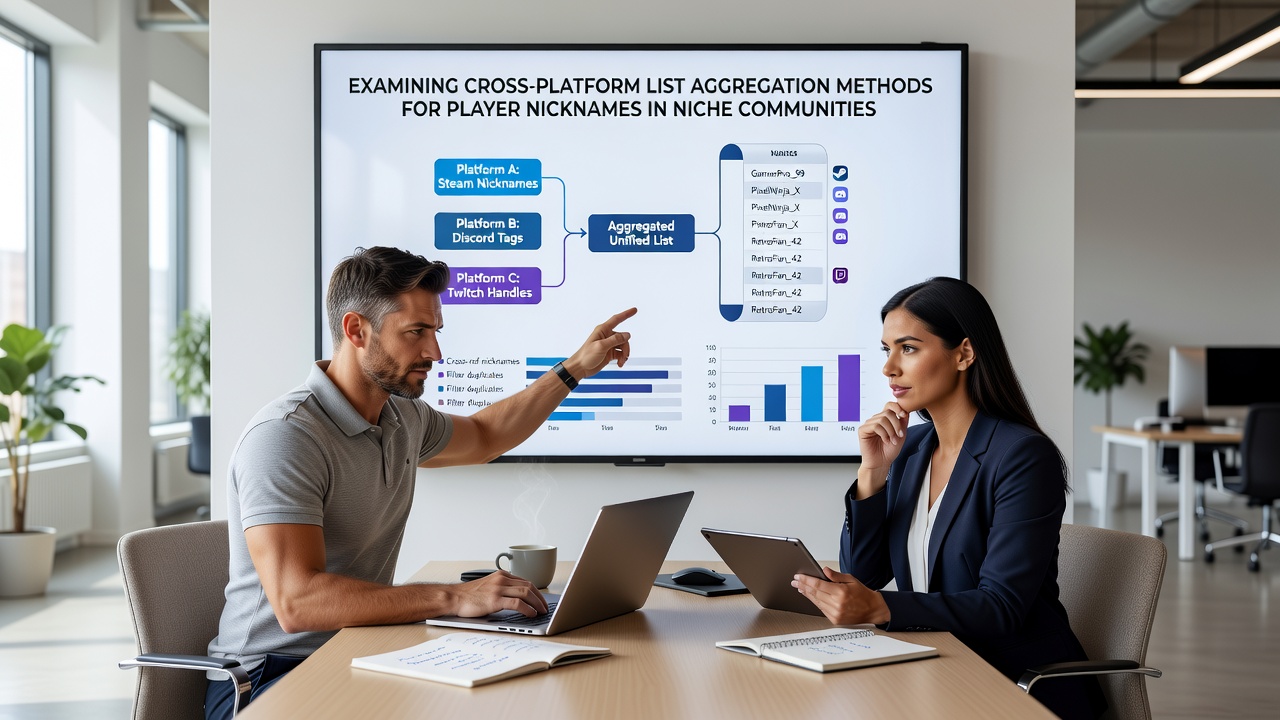
Regional language differences add further complexity, and Cyrillic nicknames often require transliteration steps before they align with Latin-based lists. Studies from academic sources indicate that communities using mixed scripts benefit from hybrid matching pipelines that combine Unicode normalization with language-specific rules. Resource constraints in volunteer-run groups mean many aggregators operate on donated server time, which restricts how frequently full reconciliations can run.
Implementation Examples Across Communities
Take one researcher who tracked a European racing game forum cluster that combined three separate top lists into a single searchable index using nightly cron jobs and basic SQL joins. Another case involved North American modding communities that developed open-source libraries for nickname harvesting, and these tools spread to Australian and Asian groups adapting the code for local character sets. Figures reveal that successful projects document every transformation step so downstream users can trace the origin of each entry.
According to the Entertainment Software Association report on digital gaming trends, cross-platform identity management now appears in developer roadmaps for several major titles. A separate analysis hosted by the Association for Computing Machinery examined matching accuracy across 12 public gaming datasets and found that combined phonetic plus edit-distance methods outperformed either technique alone by measurable margins.
Future Directions and Standardization Efforts
Industry groups have begun discussing common schema proposals that would let platforms expose nickname metadata in consistent fields without revealing additional personal details. Those who've studied these proposals note that adoption remains voluntary, yet early implementers gain easier integration with external ranking tools. As of August 2026 several test implementations use JSON-LD markup to describe nickname provenance, which simplifies auditing for compliance teams.
Conclusion
Cross-platform nickname aggregation continues to rely on a blend of API access, algorithmic matching, and occasional human oversight to maintain usable datasets for niche communities. The techniques adapt as platforms change their export options and as regulatory requirements shift across regions. Ongoing work on standardized formats may reduce friction in future merges while preserving the distinct character of each originating list.