Digital Leaderboards Transform Community Engagement Across Platforms
Leon Schmitz · Jul 22, 2026

Digital Leaderboards Transform Community Engagement Across Platforms
Online top lists have evolved into essential tools that organize vast amounts of user-generated content and competitive data across countless websites and applications, and their influence continues to expand through structured ranking systems that users interact with daily. These lists compile metrics such as participation rates, performance scores, and community votes into accessible formats that help people navigate forums, gaming environments, and specialized directories with greater efficiency.
Historical Growth of Ranking Systems
Early versions of online rankings appeared in the late 1990s on bulletin board systems where moderators tracked active contributors through simple point systems, yet the format gained momentum during the 2000s as broadband access increased and social platforms began incorporating leaderboards to highlight popular threads or skilled players. By the mid-2010s data from multiple sources showed exponential growth in list creation, driven by advances in database technology that allowed real-time updates without manual intervention.
Researchers at various institutions documented how these systems shifted from static pages to dynamic interfaces that respond to user activity in seconds, and the pattern persisted into the following decade with integration of mobile applications that deliver notifications about ranking changes directly to participants.
Core Mechanics Behind Modern Lists
Ranking algorithms typically combine quantitative factors like time spent on a platform with qualitative elements such as peer endorsements, while administrators adjust weighting parameters to prevent manipulation through automated scripts or coordinated voting campaigns. Observers note that transparency in these calculations has become a priority for many operators who publish their formulas to maintain trust among users who rely on the lists for decision-making.
Security protocols protect stored data through encryption standards that meet requirements set by organizations including the Canadian Centre for Cybersecurity, and regular audits help identify vulnerabilities before they affect large user bases. People who manage these lists often implement verification steps that confirm new entries against multiple criteria before they appear publicly.
Trends Observed Through Mid-2026
By July 2026 several platforms reported measurable increases in list participation rates following updates that incorporated artificial intelligence for personalized recommendations, and this development allowed users to discover niche rankings without extensive searching. Data compiled by the Pew Research Center indicated that roughly 68 percent of internet users had engaged with at least one online leaderboard in the preceding twelve months, highlighting sustained interest across demographic groups.
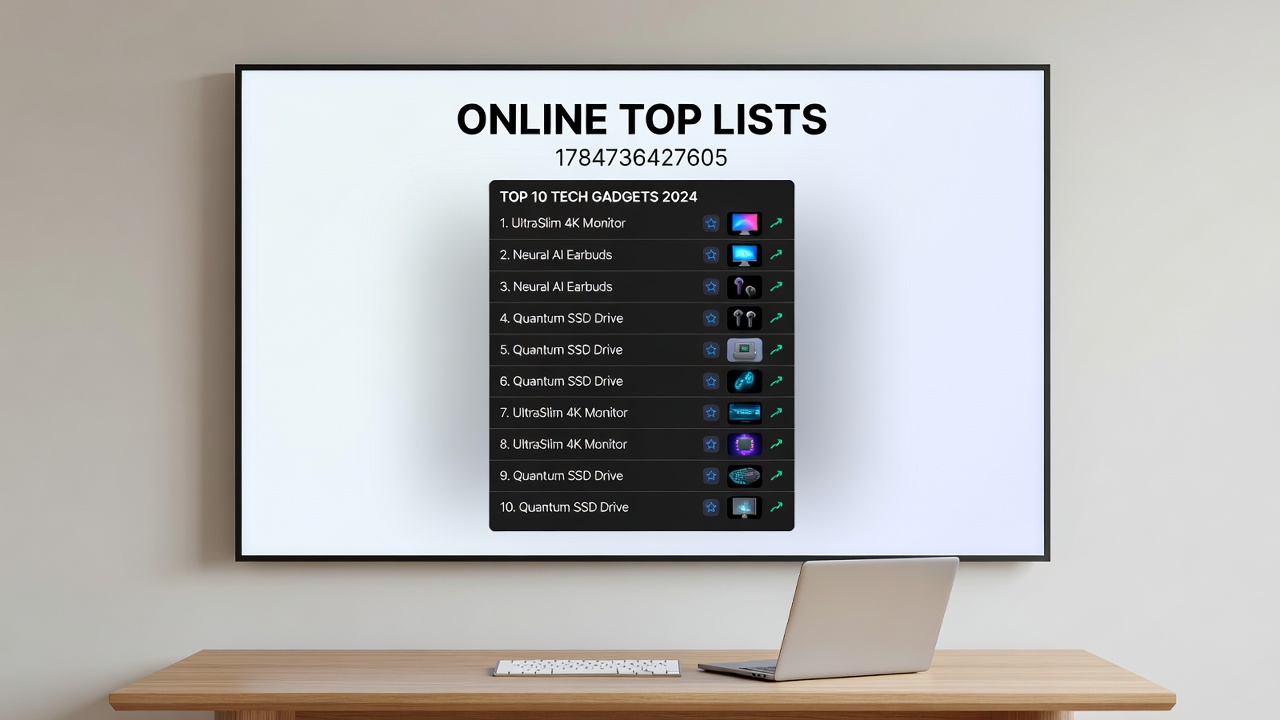
Regional variations emerged clearly during this period, with European platforms emphasizing privacy-compliant data handling under regulations from the European Data Protection Board while North American services focused on expanding cross-platform compatibility. Industry reports from the Interactive Games and Entertainment Association in Australia further revealed that gaming-related lists accounted for a significant share of total list views, although non-gaming categories such as hobby forums and educational resource directories showed comparable growth in engagement metrics.
Practical Applications in Different Sectors
Community managers utilize top lists to spotlight contributions that might otherwise go unnoticed, and this approach encourages consistent participation because visible recognition serves as a motivator for continued involvement. Educational websites apply similar structures to rank tutorial submissions or student projects, creating environments where learners can compare progress against established benchmarks without direct competition.
Business directories employ ranking systems to surface highly rated service providers based on verified customer feedback, and these lists help consumers make informed choices by presenting aggregated data in digestible formats. The underlying technology relies on scalable cloud infrastructure that handles millions of queries simultaneously, ensuring that performance remains stable even during peak traffic periods.
Challenges and Ongoing Developments
Issues surrounding data accuracy persist because incomplete profiles or outdated entries can skew results, prompting operators to introduce automated cleanup routines that flag inactive accounts for review. Participants sometimes encounter difficulties when navigating complex interfaces that require multiple clicks to access detailed statistics, leading developers to simplify navigation paths through iterative design updates.
Collaborations between list administrators and academic researchers have produced studies that examine how ranking visibility affects user behavior over extended periods, and these findings contribute to refinements in algorithm design that balance competitiveness with inclusivity. Regulatory bodies in multiple jurisdictions continue to monitor these systems for compliance with consumer protection standards, which encourages ongoing adjustments to data collection practices.
Conclusion
Online top lists function as organizational frameworks that bring order to digital spaces filled with user activity, and their continued refinement reflects broader changes in how communities form and interact online. As technology advances further, these systems will likely incorporate additional layers of customization while maintaining core principles of fairness and accessibility that have supported their widespread adoption.