Russian Forum Nicknames and Their Reach Into Global Gaming Leaderboards
Willa Weber · Jun 8, 2026
Russian Forum Nicknames and Their Reach Into Global Gaming Leaderboards
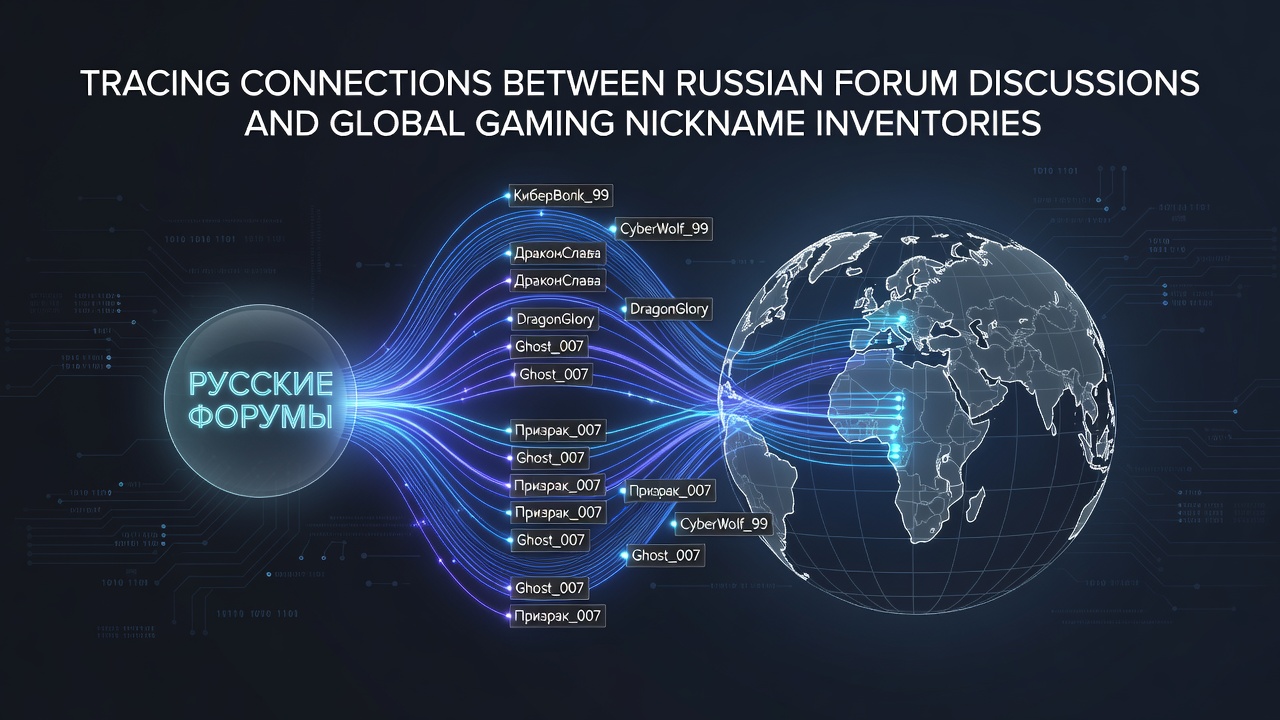
Researchers have traced patterns where usernames originating in Russian-language forums migrate into international gaming inventories, and data from multiple platforms shows repeated overlaps in structure, language mixing, and thematic choices. These connections emerge through shared player communities that participate in both regional discussions and worldwide leaderboards, creating traceable flows that analysts monitor through public records and scraped datasets.
Patterns Emerging From Russian Forum Activity
Observers note that Russian gaming forums often generate nicknames built around Cyrillic transliterations, historical references, and clan abbreviations, while participants post lists and rankings that later appear on global sites with minor adaptations for English-language servers. Data indicates clusters around specific prefixes and suffixes that repeat across months, and analysts have mapped these to entries in inventories maintained by major game publishers. Studies from European digital culture centers have documented how forum threads from 2024 and 2025 show consistent evolution of these names before they surface elsewhere.
One analysis of archived threads revealed that certain numeric suffixes and compound words first discussed in closed Russian communities later ranked in top player lists on international servers, suggesting direct transfer through player migration or shared tools. Those who track these inventories report that the same phonetic combinations appear in both contexts within weeks of forum activity spikes, and cross-referencing timestamps helps establish the timeline.
Global Inventories Capturing Similar Structures
Worldwide gaming platforms maintain nickname databases that record millions of entries monthly, and researchers have identified statistical similarities when comparing subsets against Russian forum exports. Figures from North American industry reports highlight elevated rates of mixed-alphabet names in games that support Cyrillic input, while Australian gaming associations have published summaries showing parallel growth in thematic categories such as mythic or military-inspired terms. These overlaps become visible when inventories are filtered by creation date and server region.
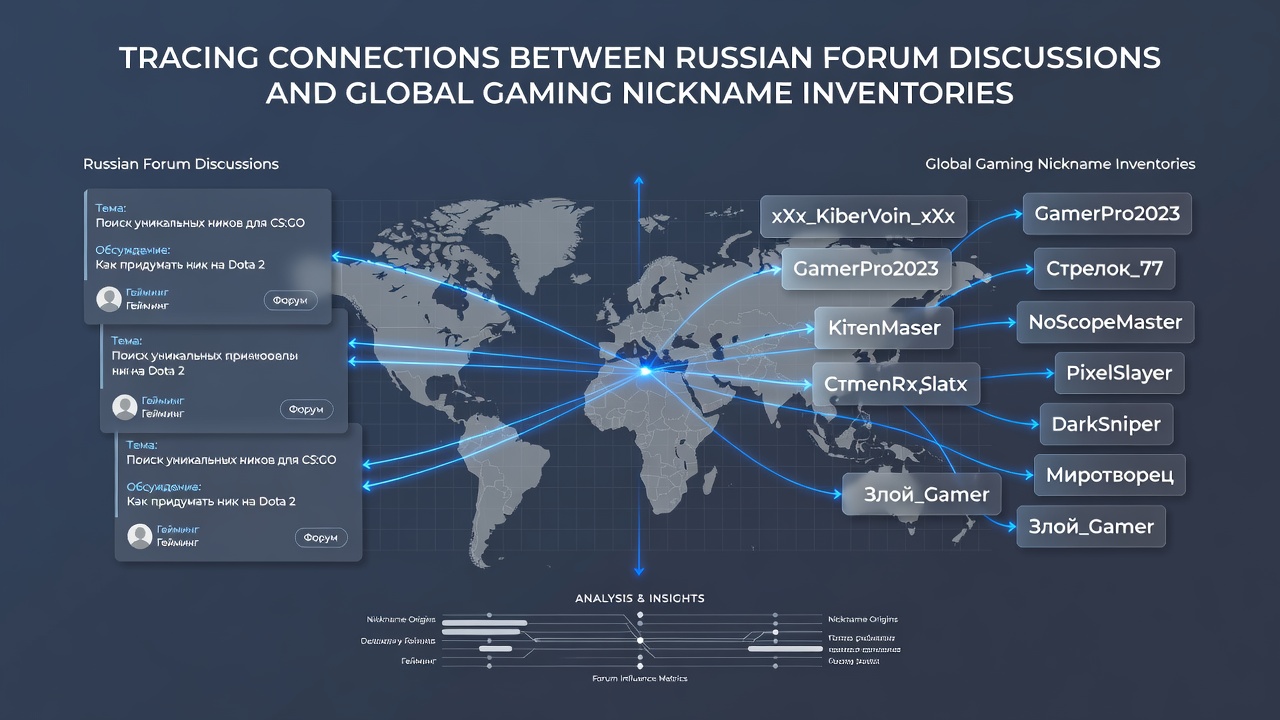
Analysts working with June 2026 datasets noted a measurable uptick in names containing specific Russian-rooted syllables appearing on European and North American servers, coinciding with renewed forum activity around major game updates. The connections are further supported by public API data that logs account creation locations alongside chosen identifiers, allowing researchers to build graphs of influence rather than relying on anecdotal reports.
Methods Used to Trace the Connections
Academic teams have applied network analysis and string-matching algorithms to large samples drawn from both sources, and results consistently point to forum-origin clusters that seed later inventory entries. Canadian research institutions have contributed open datasets that include timestamped nickname logs, enabling independent verification of migration paths. Observers emphasize that while direct causation remains difficult to prove in every instance, the statistical correlation exceeds random distribution by significant margins.
Additional work from university labs in Asia has examined character encoding patterns, revealing that players often retain core elements from Russian discussions even after transliterating for global servers. These retained fragments serve as markers that researchers use to map influence across regions without needing private account information.
Implications for Platform Moderation and Research
Platform operators have begun incorporating cross-forum monitoring into their abuse-prevention systems, and data shared through industry coalitions shows reduced duplicate registrations when these signals are flagged early. Regulatory bodies in the European Union have referenced similar studies when updating guidelines on digital identity tracking, while US-based gaming trade groups have issued reports on the value of multilingual pattern recognition. The reality is that these connections continue to evolve with each new game release, requiring ongoing data collection rather than one-time analysis.
Conclusion
Evidence assembled from forum archives, inventory exports, and academic studies demonstrates measurable links between Russian discussion spaces and global gaming nickname pools. Continued monitoring through 2026 and beyond will likely refine these models, providing clearer pictures of how regional creativity feeds into worldwide player ecosystems.