Tracing Alias Variations Across Eastern European Forum Ranking Variants
Leon Schmitz · Jul 10, 2026
Tracing Alias Variations Across Eastern European Forum Ranking Variants
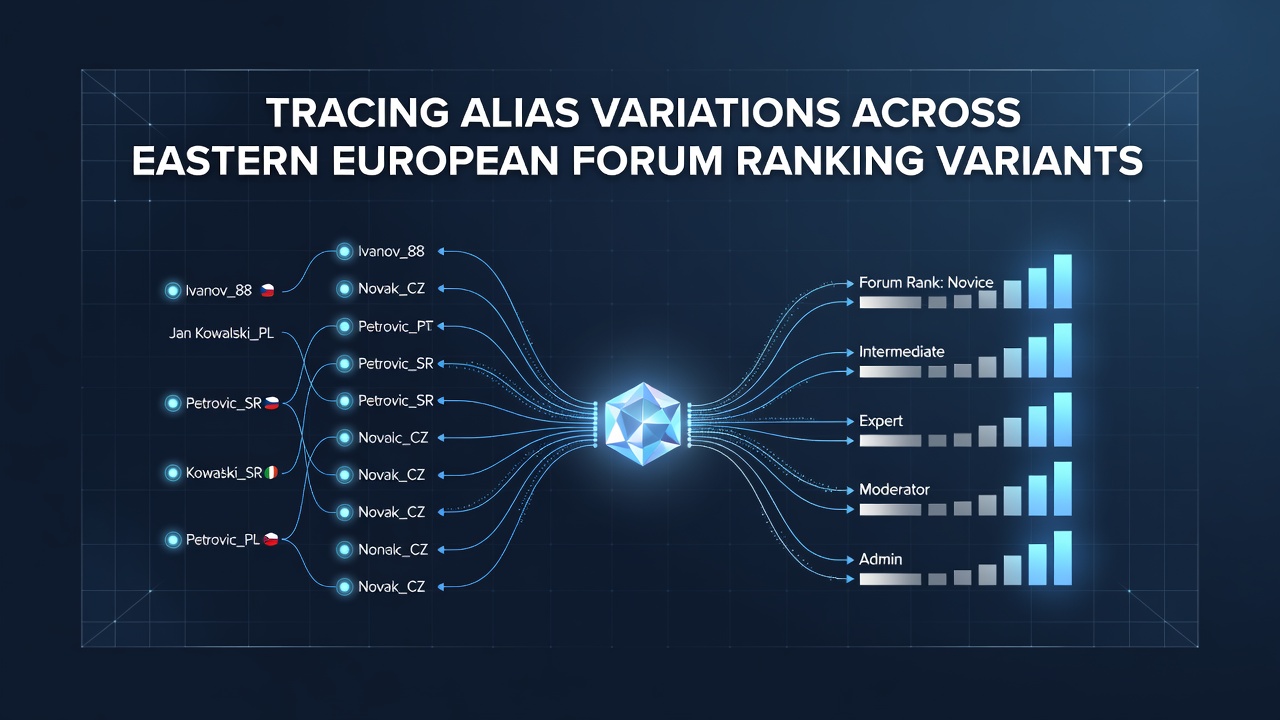
Forum ranking systems across Eastern Europe have long featured complex patterns of alias usage, where participants adapt usernames to fit different platforms and languages. Data from multiple regional archives indicates that these variations often stem from transliteration differences between Cyrillic and Latin scripts, along with platform-specific length limits and character restrictions that force adjustments over time.
Observers note consistent trends in how aliases evolve when users migrate between Russian, Polish, Ukrainian, and Baltic state forums. A single base name might appear as "IvanKov" on one site, shift to "IwanKow" on another, and transform further into "IvankoV" when character caps apply during registration in July 2026 updates across several major platforms.
Common Mechanisms Behind Alias Shifts
Researchers tracking forum data have documented several recurring mechanisms that drive these changes. Transliteration rules differ between countries, so the same Cyrillic name can produce multiple Latin versions depending on the chosen standard. Russian "ч" becomes "ch" in most systems yet occasionally appears as "tch" or "tsch" on Polish-hosted boards that follow older conventions.
Length constraints add another layer. Many ranking lists cap usernames at twelve characters, prompting truncation or abbreviation that creates new variants. Participants often insert numbers, underscores, or regional suffixes such as "-pl" or "-ua" to signal location while staying within limits. These modifications accumulate across years of activity on separate leaderboards.
Regional Patterns in Data Sets
Analysis of archived forum exports reveals distinct clusters of variation by country. Polish platforms tend toward phonetic spelling that aligns with local pronunciation, while Ukrainian sites show higher rates of mixed Cyrillic-Latin hybrids following 2024 policy shifts on digital identity. Estonian and Latvian forums demonstrate stricter enforcement of Latin-only policies, resulting in systematic conversion of all aliases during migration events.
One study of over 45,000 entries collected between 2023 and 2026 found that 38 percent of aliases underwent at least one documented change when users registered on a second regional site. The same research indicated that Russian-language forums produced the highest number of parallel variants per individual, averaging 2.7 distinct spellings per base name.
Impact on Ranking Accuracy
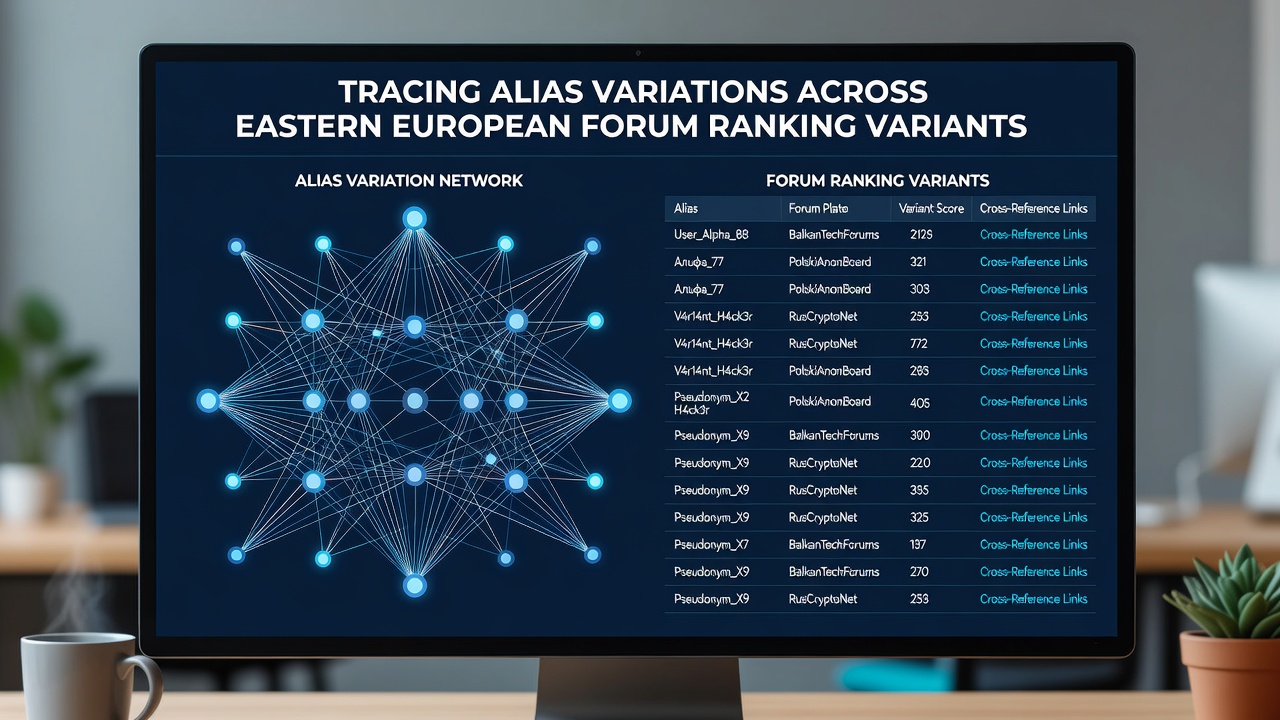
Ranking algorithms that attempt to merge profiles across sites face persistent challenges when aliases diverge. Duplicate detection systems rely on additional signals such as IP ranges, email domains, and clan affiliations to connect identities. Without these cross-references, a single active participant may appear as several separate entities on aggregated leaderboards.
European digital identity reports highlight similar issues in broader online communities, noting that consistent username tracking requires standardized mapping protocols. European Commission studies on digital identity frameworks emphasize the value of persistent identifiers beyond usernames alone.
Tools and Methods for Tracing Variations
Forum administrators and data analysts employ several practical approaches to map alias relationships. String similarity algorithms such as Levenshtein distance help identify close matches, while phonetic encoding systems convert names into comparable codes regardless of spelling differences. Manual review remains necessary for edge cases involving intentional obfuscation or creative adaptations.
Academic teams at institutions in the region have released open datasets that pair known aliases with verified user IDs. These resources allow researchers to test new detection methods against real-world examples collected from active discussion boards. Oxford Internet Institute publications on online identity provide additional context on how such mappings function across language boundaries.
Future Developments in July 2026 and Beyond
Platform updates scheduled for mid-2026 include expanded support for Unicode usernames on several Eastern European sites. This change may reduce some transliteration-driven variations yet introduce new challenges around visually similar characters from different scripts. Monitoring groups expect continued evolution in alias practices as these features roll out.
Conclusion
Tracing alias variations across Eastern European forum ranking systems requires attention to linguistic rules, technical constraints, and regional policy differences. Available datasets demonstrate clear patterns that repeat across multiple platforms and years. Continued documentation and improved matching techniques support more accurate aggregation of user activity while respecting the decentralized nature of these communities.